
Reviewed · FOOD TOURS
Caribbean Food Experience
Puerto Rican food comes alive in Piñones, where chef Mauro turns a two-hour class into a generous meal, a practical lesson, and a friendly look at island cooking. You’ll work with plantains, sofrito, adobo, pineapple, and guava rather than simply hearing about them. I like the hands-on cooking and the chance to make piña coladas and mofongo cups yourself. I also like the setting away from San Juan’s main tourist streets, where the food feels tied to local daily life.
The main consideration is the meeting point in Piñones, outside the center of San Juan. The experience is short, so you won’t get a full survey of Puerto Rican cuisine, and the exact balance between cooking and eating may depend on the group. Still, for $89 per person, the combination of instruction, drinks, food, and a small group makes a strong case.
Key points to know before booking
- Chef Mauro leads the class: He is described as patient, entertaining, and clear in his instruction, making the session suitable for beginners.
- You make several Puerto Rican staples: The class includes piña coladas, sofrito, tostones baskets, mofongo cups, and quesitos.
- The food is part of the lesson: You learn how plantains, adobo, sofrito, pineapple, and guava shape Puerto Rican cooking.
- Groups are capped at 12 people: That is small enough for a more personal class than a large demonstration.
- The setting is Piñones: You meet near the Centro Comunal Piñones on PR-187, in the coastal area of Carolina and Loíza.
- The tour returns to its starting point: The activity lasts about two hours and ends where it begins.
Why Piñones is a good place for a Puerto Rican food class
Piñones gives this experience a useful sense of place. It sits along Puerto Rico’s northeastern coast, near San Juan but away from the city’s main hotel and sightseeing zone. That matters because Puerto Rican food is not just a collection of recipes. It reflects home cooking, family habits, local produce, and the island’s long relationship with Spanish, African, and Caribbean traditions.
The meeting point is Try Cooking Puerto Ricolado, opposite the Centro Comunal Piñones on PR-187. Since the class starts and ends there, you have a clear base for the experience. The supplied details do not include transportation or hotel pickup, so I would plan your route to Piñones before booking and allow enough time to arrive without rushing.
The coastal setting also makes this a useful choice for anyone who wants more than a restaurant meal. You are not simply ordering mofongo or a piña colada from a menu. You are learning what goes into them and seeing how a few basic ingredients create very different textures and flavors.
Other places to eat your way through San Juan:
- Authentic Flavors of San Juan Food Tour
★ 5.0 · 4,741 reviews - Savor the Sunset: Old San Juan Walking Food Tour
★ 5.0 · 559 reviews - Morning Old San Juan Food Tour
★ 5.0 · 233 reviews
Meeting chef Mauro and settling into the kitchen
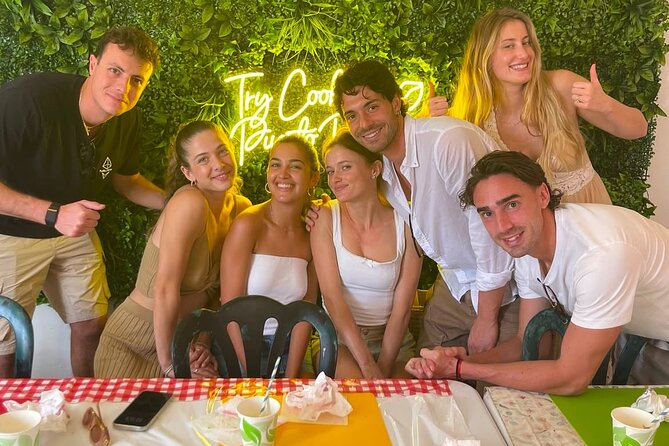
The class is designed for beginners, which takes pressure off anyone who is not used to cooking in front of other people. Mauro’s style appears relaxed and social. He gives instructions, answers questions, and keeps the class moving without making it feel like a test.
That tone is important. A cooking class can be frustrating if the instructor expects professional knife skills or moves too fast. Here, the emphasis is on participation and understanding. You can roll up your sleeves and help prepare the food, while still enjoying the class if you prefer to watch more closely.
Salsa music is part of the atmosphere, and the class has a friendly, informal feel. Mauro also adds personal touches, such as sharing fresh fruit. One account describes him picking a mango from a tree in his yard for the group to taste. Details like that connect the food to the place in a way a standard restaurant meal cannot.
The group limit of 12 people is another plus. It is large enough for a social meal, but small enough that you should have a reasonable chance to follow the preparation and ask questions. The exact amount of hands-on time can vary with the group, so you should not expect every person to perform every step of every dish.
Making a fresh piña colada
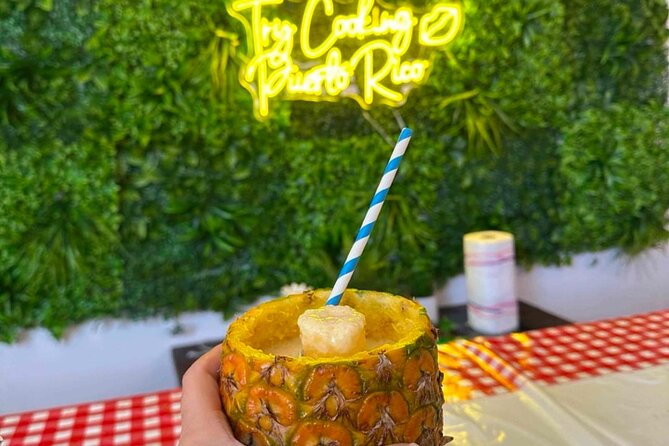
The piña colada is one of the most appealing parts of the class. Puerto Rico is strongly associated with this drink, and preparing it yourself gives you more than a sweet beverage served in a glass. You get to see the ingredients come together and adjust your understanding of what makes the drink work.
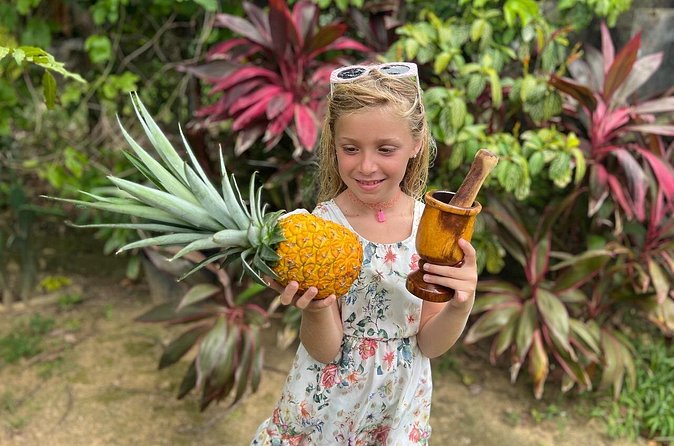
Fresh pineapple is part of the experience, and the finished drink is served during the meal. The class description specifically includes learning to make piña coladas, while the food accounts describe the result as especially memorable. I would consider this a practical lesson for anyone who wants to recreate a taste of Puerto Rico at home.
This portion also sets the tone for the class. You begin with something familiar and fun before moving into savory dishes and cooking techniques. If you are traveling with family or friends who are not serious cooks, the drink-making offers an easy way into the activity.
Keep in mind that the experience includes alcohol in the form of piña coladas, but the supplied information does not specify nonalcoholic alternatives. If that matters to you, ask the provider before arrival. The class is also not described as a dedicated cocktail workshop, so the drink is one part of a broader food experience.
Sofrito, adobo, and the base of Puerto Rican cooking
Sofrito is one of the most useful things you will encounter in the class. It is a key flavor base in Puerto Rican cooking, and learning to prepare it helps explain why many island dishes taste layered even when they use familiar ingredients.
You will also learn about adobo and the way seasoning supports the main ingredients. These lessons are more valuable than a list of dishes because they give you a method you can use later. Once you understand the flavor base, you can better recognize the structure of Puerto Rican rice dishes, stews, meats, and vegetable preparations.
The food is prepared fresh during the experience. One meal includes sofrito with chicken served in mofongo cups, giving you a chance to see how the seasoning works with both meat and plantains. The class does not promise a fixed full menu beyond the named dishes, so think of it as a guided introduction rather than a formal cookbook-style course.
For me, this is where the $89 price begins to make sense. You are paying for food, but also for the explanation behind the food. A restaurant can serve you a finished dish. Mauro shows you the components that make the dish taste Puerto Rican.
Other meals booked around San Juan:
- Old San Juan Historical Walk, Shopping, and Dining w/ Transport
★ 4.5 · 381 reviews - FlyDining: Sunset & City Lights Dinner Over Old San Juan
★ 4.5 · 326 reviews - FlyDining: 4 Courses Dinner with City Lights & Ocean Breeze
★ 4.5 · 71 reviews - Ponce: Walking City Tour, Entry Seralles Museum & Dinner Included
★ 5.0 · 18 reviews
Plantains become tostones baskets and mofongo cups
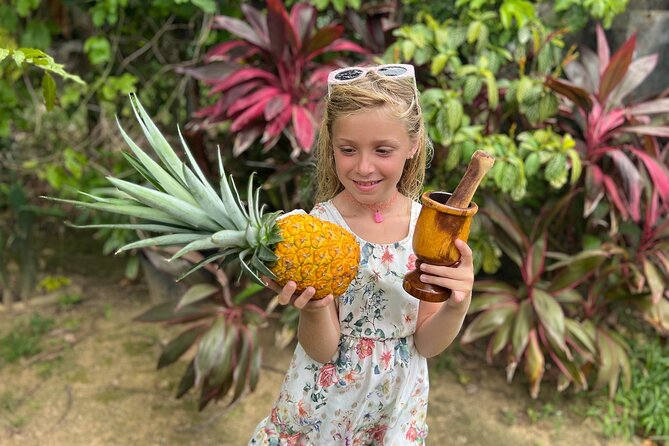
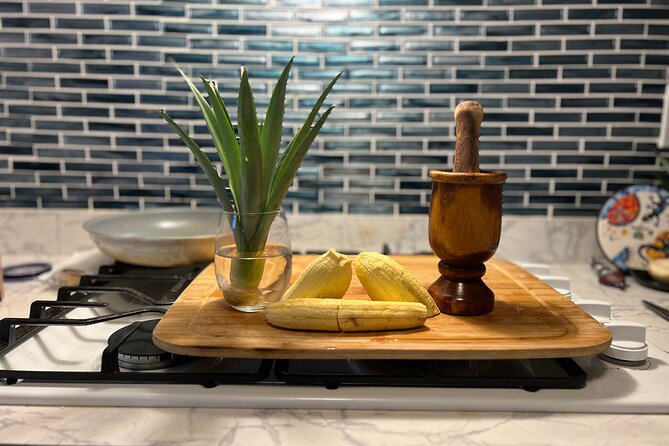
Plantains are central to the class. You learn about tostones baskets and mofongo cups, two preparations that show how one ingredient can be turned into different forms with different uses.
Tostones are fried green plantains, while mofongo is made from mashed plantains and is often paired with savory ingredients. The class uses plantains in a way that is both visual and practical, creating cups for the prepared food. That makes the lesson easy to remember and fun to serve.
You do not need to arrive as a plantain fan. One account describes being surprised by how much the plantains improved with the marinade and mofongo preparation. This is a good example of why a cooking class can change your view of an ingredient. Texture, seasoning, and technique matter as much as the ingredient itself.
The plantain segment is also useful for families and mixed-interest groups. Someone who wants cultural context can listen to the explanation. Someone who prefers to cook can focus on shaping and preparing the cups. Someone mainly interested in eating gets a hearty part of the meal at the end.
The supplied details do not specify every cooking method or the order of each step, so I would not book this expecting a full professional lesson on frying technique. The value is in learning the basic preparations and eating the results in a relaxed setting.
Quesitos and a sweet finish with guava
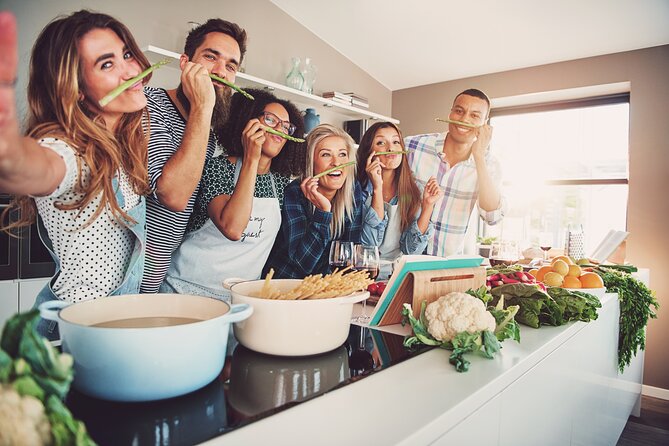
Quesitos give the class a pastry component. These Puerto Rican cream cheese pastries are paired with guava in the experience, adding a sweet finish after the savory food.
The dessert matters because it rounds out the meal. You are not only learning one category of Puerto Rican cooking. You get a drink, savory seasoning, plantain dishes, and a pastry. One account describes the guava pastry as especially good, and the class includes the chance to prepare quesitos rather than simply receive dessert from the kitchen.
The range of dishes also makes this a useful introduction if you are new to Puerto Rican food. You can compare sweet and savory flavors and see how fruit appears in both drinks and desserts. The fresh pineapple and mango references add to that sense of using local fruit in simple, direct ways.
If you have a dietary restriction, ask before booking. The experience accommodated a gluten-free dessert for one person with celiac disease, which is encouraging, but the information does not promise a fully gluten-free menu or separate preparation area. You should confirm what can be changed for your needs instead of assuming every dish can be adapted.
Eating together is part of the lesson
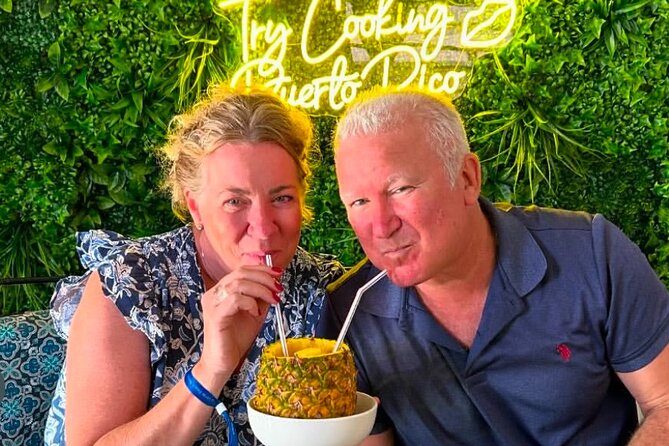
The final meal is not an afterthought. Sitting down to eat what you helped prepare gives you a chance to compare the dishes and ask follow-up questions while the flavors are still fresh.
The meal can include chicken with sofrito in mofongo cups, tostones, quesitos, and a piña colada. The exact serving details may vary, but the food is described as generous enough to feel like more than a token tasting. That is useful if you are choosing between this and a short demonstration with small samples.
I also like the social side of the meal. Salsa music and a casual atmosphere make it suitable for couples, families, and friends. You can cook together, share tasks, and talk with the instructor without the formal structure of a culinary school.
The class is not aimed at people seeking a quiet, private dining experience. With up to 12 participants, you will be part of a group, and the pace will be shaped by everyone in the room. If you want a private chef lesson or a highly technical course, this may feel too informal. If you want a friendly introduction with plenty to eat, the format works better.
Is $89 a fair price?
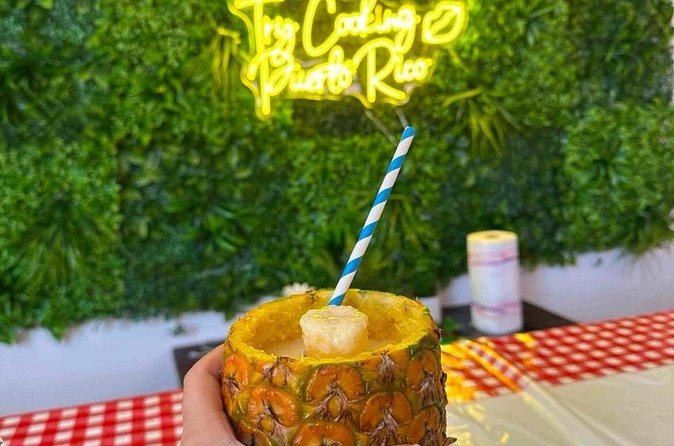
At $89 per person, this is not the cheapest way to eat in San Juan. You could buy a meal and a drink for less. The question is what else you want from the afternoon.
The price includes about two hours with a local chef, instruction in several Puerto Rican dishes, a piña colada lesson, food prepared during the class, and a small group capped at 12 people. You also leave with techniques for sofrito, plantain preparation, and quesitos rather than only a photograph of a meal.
I see the strongest value for people who enjoy cooking or want a cultural activity that involves doing something. If you mainly want to sample food and have no interest in preparation, a food walk or restaurant meal may offer better value. If you want to understand what you are eating and take part in the process, the price is reasonable.
The class is also a good way to spend part of a day outside San Juan’s busiest areas. Since there is no stated hotel pickup, remember that getting to Piñones is part of your planning. The activity itself is short, but the location may take more time than a class in Old San Juan depending on where you are staying.
Who will enjoy this class most?
I would recommend it to:
- Couples who want a shared activity with a meal at the end.
- Families looking for a hands-on introduction to Puerto Rican culture.
- Beginner cooks who prefer a friendly class over a technical workshop.
- Food lovers who want to understand sofrito, adobo, plantains, and guava.
- People staying in San Juan who are willing to visit Piñones.
- Anyone who enjoys small-group experiences with a local host.
It may not suit you if you need a fully fixed menu, a private setting, or a class focused on advanced cooking skills. It is also worth checking dietary arrangements in advance if you have celiac disease, food allergies, or other strict requirements.
Service animals are allowed. The experience requires good weather, and if poor weather causes a cancellation, you can receive a different date or a full refund. For other cancellations, you need to cancel at least 24 hours before the start time for a full refund. Changes or cancellations inside that window are not accepted.
Should you book the Caribbean Food Experience?
I would book this if you want a relaxed, food-centered look at Puerto Rico that goes beyond eating in a restaurant. The best parts are the personal instruction from Mauro, the fresh piña colada, the plantain preparations, and the chance to sit down with a meal you helped make.
Book with the right expectations. This is a two-hour introduction, not a complete culinary course or a full-day tour of Piñones. Plan your route to the meeting point, ask about dietary needs, and be ready to share the kitchen with a small group.
For $89, the experience offers a useful mix of cooking, tasting, culture, and conversation. If sofrito, mofongo, quesitos, and piña coladas sound more appealing than another standard sightseeing stop, this is a strong choice.
FAQ
Where does the Caribbean Food Experience start?
It starts at Try Cooking Puerto Ricolado, opposite the Centro Comunal Piñones on PR-187 in Carolina, Loíza, Puerto Rico.
Where does the activity end?
The activity ends back at the meeting point.
How long does the experience last?
The cooking and tasting experience lasts approximately two hours.
How many people can join the class?
The activity has a maximum of 12 participants.
What dishes and drinks will I prepare?
You will learn to make piña coladas, sofrito, tostones baskets, and quesitos. The food experience also includes mofongo cups and Puerto Rican dishes prepared with ingredients such as plantains, adobo, chicken, pineapple, and guava.
Can I cancel for a full refund?
Yes. You can cancel at least 24 hours before the local start time for a full refund. Cancellations or changes made less than 24 hours in advance are not accepted for a refund. If poor weather cancels the experience, you will be offered another date or a full refund.
More things to eat and drink around San Juan
- El Yunque Waterslide and Waterfall Tour with Food and Photos
★ 4.5 · 1,215 reviews - Rum Tasting Tour at Casa BACARDÍ in Puerto Rico
★ 4.5 · 1,095 reviews - Ron del Barrilito Rum Tasting Skip-the-Line Tour
★ 5.0 · 192 reviews - Bio Bay Magic and Rum Tasting Tour from San Juan
★ 4.5 · 152 reviews
Just added in San Juan
- eFoil Lesson Old San Juan★ 5.0 · 5 reviews
- Window Cave and Indian Cave private tour with an archaeologist as guide★ 4.5 · 9 reviews
- “Unique Tour” Loiza, Cultue, Art & Bomba Dance Class on The Beach★ 5.0 · 22 reviews
- Private Windsurf Experience in Puerto Rico★ 5.0 · 7 reviews
- PR Chinchorreo-Beach and Bar Hopping Tour★ 4.0 · 28 reviews
- Private Wellness Tour of Puerto Rico Waterfalls and Hot Springs★ 5.0 · 5 reviews
- USDA El Yunque National Forest and Luquillo Beach Tour★ 5.0 · 10 reviews
- Authentic San Juan Guided Walking Food Tour with Pina Colada★ 5.0 · 3 reviews
Food Tours, compared.
Savor the Sunset: Old San Juan Walking Food Tour
Read our review →
Pinones Bar Hopping Beach Food Tour & Caguas River Hidden Gem
Read our review →
El Yunque Hike, Waterslide & Luquillo Kiosks Food with Transport
Read our review →
Old San Juan Food Tour with 7 Tastings of Authentic Local Flavors
Read our review →
Browse the lists this tour appears in