
Reviewed · HISTORICAL TOURS
Explore Indigenous Roots, Experience a day in the life of a Taíno
Puerto Rico’s indigenous roots come alive far from San Juan’s usual sights. This full-day trip takes you to Caguana’s major Taíno ceremonial grounds, a quiet river in the Utuado mountains, and an off-grid permaculture farm where sustainable living is part of the lesson.
I like the mix of serious cultural learning and time in nature. I also like that guide Tristan brings the day down to a human scale, explaining Taíno customs, local plants, and Puerto Rico’s Jíbaro identity rather than rushing you from one photo stop to the next.
The main thing to consider is the long day and rural setting. The river stop may involve walking and swimming, and groups of fewer than four do not receive the farm-to-table lunch, though the farm visit remains part of the tour.
Key points to know before booking
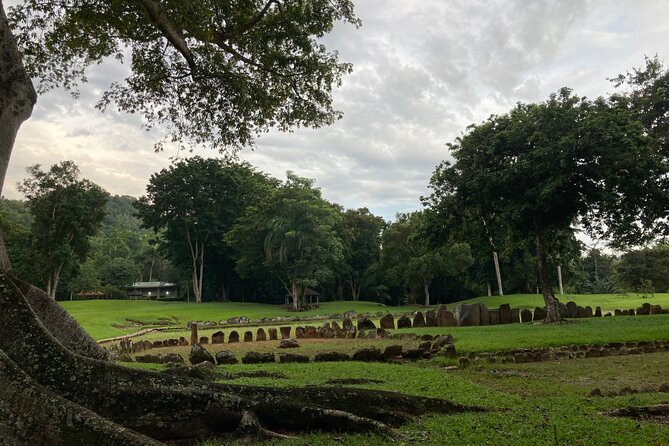
- Caguana is the cultural anchor: Spend about 90 minutes at the Caribbean’s largest ceremonial ground, with a museum and Taíno artifacts.
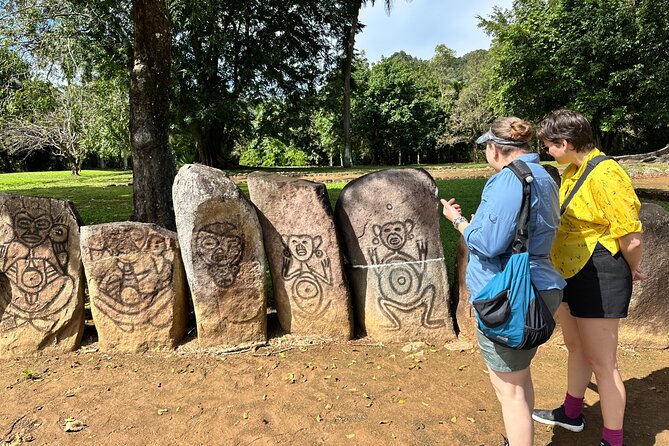
- The river stop is more than a swim: Charco Los Morones offers a quiet mountain setting, possible swimming, sunbathing, and indigenous petroglyphs.
- The farm visit gives the day a modern purpose: Learn about permaculture, off-grid homes, sustainability, and food grown in the mountains.
- Tristan leads with patience and range: He explains indigenous people, plants, and local traditions, and answers questions without rushing.
- The group is capped at 14 people: That keeps the experience more personal than a large coach tour.
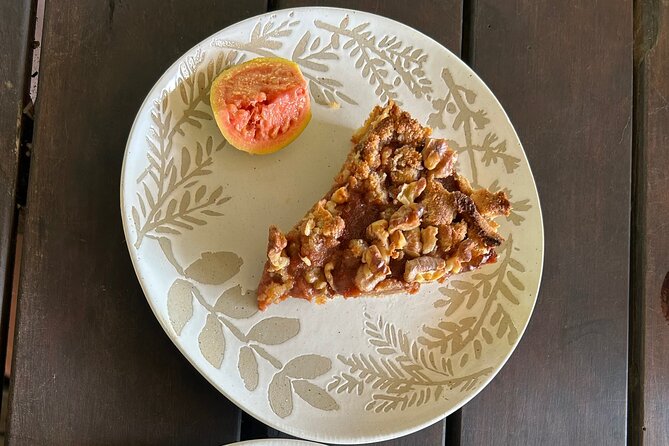
- Lunch depends on group size: Groups of four or more receive a farm-to-table meal. Smaller groups visit the farm but eat lunch elsewhere.
Why this day feels different from a standard San Juan tour
Most San Juan excursions stay close to the coast, colonial streets, forts, and familiar city stops. This one heads inland toward Puerto Rico’s Cordillera Central, where the day is shaped by forests, rivers, agriculture, and mountain communities.
That change of setting is the real point. You are not simply adding another attraction to your holiday. You are seeing a less polished, more grounded side of the island and connecting present-day Puerto Rico with its Taíno past.
The experience also joins four subjects that are often treated separately: indigenous culture, natural places, the Jíbaro tradition, and sustainable living. The result is not a museum-only history lesson or a basic countryside outing. You move from archaeological remains to petroglyphs, then to a working example of how people can live with fewer outside resources.
I especially like the way the day links the old and the new. At Caguana, you learn about the people who lived here before European colonization. At the river, you see carvings left by indigenous ancestors in their original setting. At the farm, you consider how modern communities can use local materials, plants, and practical design to live more lightly.
Other heritage stops around San Juan:
- Historical San Juan Bay Sunset Sailing Tour
★ 4.5 · 710 reviews - Historic Old San Juan Sunset Walking Tour
★ 5.0 · 634 reviews - Old San Juan Historical Walk, Shopping, and Dining w/ Transport
★ 4.5 · 381 reviews
Caguana, where Taíno history takes center stage
Your first major stop is Parque Ceremonial Indígena de Caguana, about 90 minutes from the day. It is described as the largest ceremonial ground in the Caribbean and one of the most important places connected with Taíno history.
This is the stop to take seriously. The grounds are not just a scenic pause or a quick photo opportunity. They provide the foundation for understanding the rest of the day. You can see the spaces associated with Taíno ceremonies and then visit the museum, which contains objects used in daily life.
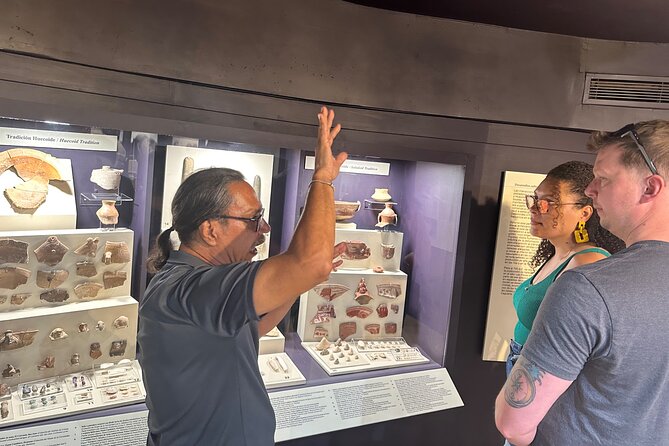
The museum matters because it helps keep the story practical. Instead of treating the Taíno as a distant people known only through a few symbols, the displays point toward ordinary activities, tools, and objects. That gives you a better sense of how people lived and organized their world.
Guide Tristan’s role is useful here. His explanations connect the site to the wider question of what was lost, what survived, and how indigenous identity continues to shape Puerto Rico. The tour is not presented as a dry list of dates. It is a chance to ask questions and place the physical remains in a larger cultural setting.
Give yourself time to look closely. The ceremonial grounds reward attention more than speed. If you prefer a rapid itinerary with many attractions, 90 minutes at one archaeological site may feel long. If you want to understand why Taíno heritage still matters, this is the right pace.
Charco Los Morones, petroglyphs beside a quiet river
The second stop changes the mood. Charco Los Morones is an off-the-beaten-path river area in the Utuado mountains, where you may swim, sit in the sun, and look for petroglyphs left by indigenous ancestors.
This is the most relaxed part of the day, but it still has cultural weight. The carvings are not separated from nature behind glass. They are connected to the river and the surrounding mountains, giving you a stronger sense of place than a museum display can provide.
You should think of this as a nature stop with a cultural layer, not a guaranteed swimming excursion. The plan allows for swimming, but conditions can affect what is practical. If you enjoy getting into the water, bring the items you need for that part of the day. If you prefer to stay dry, the river setting and petroglyphs still give you plenty to see.
The stop lasts about two hours, which allows the day to breathe. You are not expected to examine the carvings and immediately climb back into a vehicle. You may have time to walk beside the river, sunbathe, or cool off in the water.
That said, this is not the best choice for anyone who wants a completely effortless outing. A portion of the enjoyment comes from being outdoors and moving around the river area. The exact feel of the stop can also depend on weather and water conditions, since the tour requires good weather.
The permaculture farm and Puerto Rico’s Jíbaro identity
The final main stop is in Utuado at a sustainable permaculture farm. Here, you receive a tour of the grounds and learn about sustainability, off-grid living, and the ways people can build and manage a home with local materials and resources.
This is where the tour becomes especially personal. One of the homes described from the experience is a manually built round house in the woods, made with environmentally sustainable materials. A roof planted with useful greenery helps illustrate the practical thinking behind the project. The farm is not simply a pretty place to eat. It is a working example of design, food production, and self-sufficiency.
You also get a closer look at Puerto Rico’s Jíbaro identity. The term is tied to the island’s rural culture and mountain communities, and the farm gives that subject a living setting. Instead of discussing country life only as a tradition from the past, you see how ideas about land, work, food, and independence can still shape daily life.
Tristan’s range is an asset here. He can speak about indigenous people, plants, and sustainable practices, while also making space for your questions. That matters because permaculture can quickly become a string of unfamiliar terms. A good guide helps you see how the ideas connect to ordinary needs such as food, shelter, water, and energy.
The stop lasts about 90 minutes. That is enough time for a useful introduction, though it is not a full course in permaculture. You will leave with a working picture of the farm and its methods, not with every technical detail.
Same island, a different sort of day:
- San Juan Guided Snorkel With Turtles Tour and Videos
★ 5.0 · 12,947 reviews - Top Rated El Yunque Rainforest & Waterslide – SmallGroup Tour
★ 5.0 · 12,789 reviews - Night Kayak – Condado City Lights Tour
★ 4.5 · 4,807 reviews - Authentic Flavors of San Juan Food Tour
★ 5.0 · 4,741 reviews
What lunch adds, and an important group-size catch
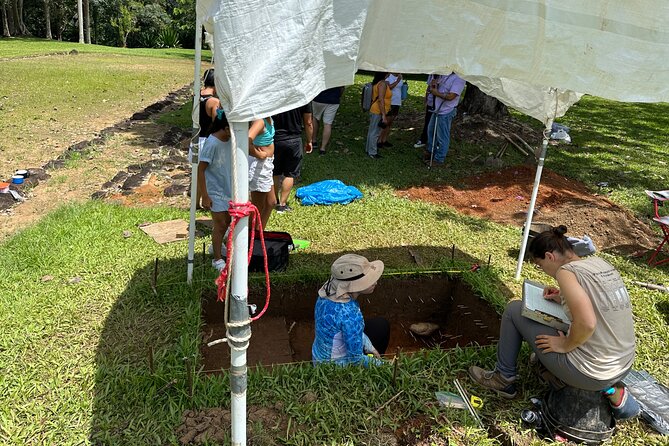
For groups of at least four people, the day ends with a farm-to-table meal. Food grown at the farm and prepared in that setting gives the final stop a satisfying purpose. You have spent the day discussing local plants and sustainable living, then you get to experience some of that food directly.
This is one of the strongest value points of the trip, but you need to read the condition carefully. If your group has fewer than four people, the farm visit is still included, but lunch takes place elsewhere. The exact alternative location is not specified, so do not book a small-group trip assuming that the farm meal is guaranteed.
That distinction could affect your decision. If the meal is a major reason you want to book, confirm the group-size arrangement before paying. If your main goal is the cultural and environmental program, the smaller-group format may still suit you well.
The guide and the feel of a small-group day
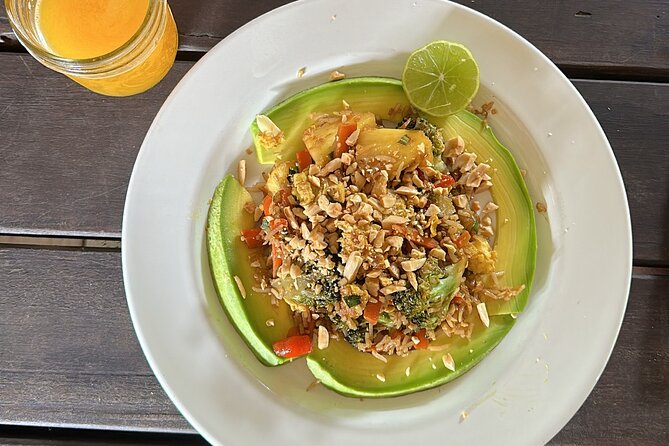
The tour is led by Tristan of Tranki Tours, and the guide makes a real difference to this kind of itinerary. You are moving between archaeology, indigenous culture, river ecology, plants, rural identity, and sustainable construction. A guide who can handle questions across all those subjects keeps the day from feeling fragmented.
The maximum group size is 14 people. That is small enough for a more direct exchange than you would get on a large bus tour, while still allowing the activity to operate as a shared excursion.
The tone is also more flexible than a standard attraction loop. You have time at each stop, and the experience is built around conversation as much as sightseeing. If you like asking questions and hearing how places connect, this will likely suit you.
If you prefer strict structure, constant narration, and polished facilities at every stop, the rural character may feel less predictable. The appeal here is the opposite: fewer crowds, less repetition, and access to places that do not feel designed for mass tourism.
Price, timing, and what the eight hours include
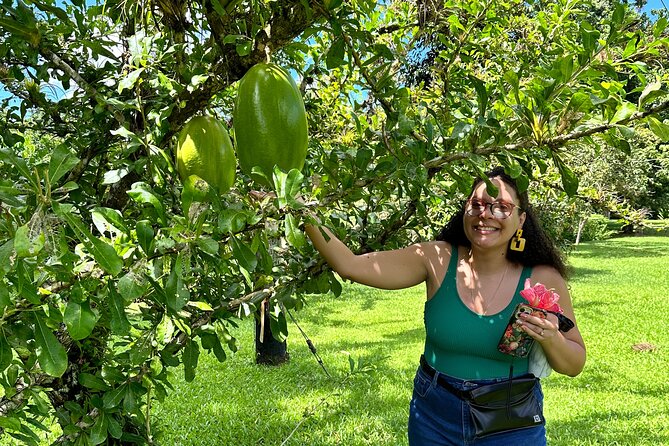
The price is $175 per person for approximately eight hours. That is not a low-cost city tour, but the value depends on what you want from a day in Puerto Rico.
You are paying for a full-day outing from San Juan into the central mountains, a guide, admission to Caguana, access to a river area, a farm visit, and, for groups of four or more, a farm-to-table meal. You are also paying for an itinerary that combines cultural interpretation with places that are harder to connect on your own.
The day begins at 8:00 a.m. at 114 Avenida José de Diego in San Juan and ends back at the meeting point. Pickup is offered, but you should confirm the pickup arrangement when booking rather than assume that every San Juan address is included.
An eight-hour schedule means you should protect the whole day. This is not an activity to squeeze between a morning at the beach and an evening reservation in Old San Juan. The early start is useful because it gives the group time to reach the interior and still enjoy the river and farm without racing.
The group cap of 14 helps justify the price. You are not simply buying transportation between three places. You are buying access to a guide-led interpretation of sites and practices that require context to appreciate.
Who should book this experience
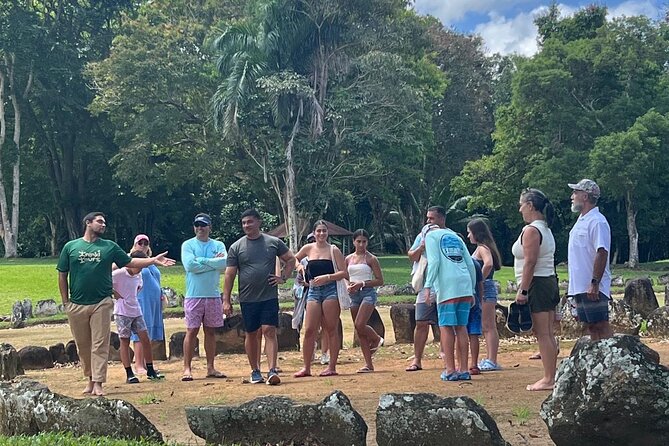
I would recommend this day to you if you want more than the familiar San Juan circuit. It suits people interested in Taíno heritage, rural Puerto Rico, archaeology, plants, rivers, and sustainable living.
It is also a good match if you enjoy variety. The day has a cultural stop, an outdoor stop, and a hands-on social stop at the farm. You are unlikely to feel stuck in one format for all eight hours.
The experience may suit families and mixed-age groups if everyone can participate in the outdoor portion, since most people can take part and service animals are allowed. Still, the river stop may be less comfortable for anyone who does not enjoy walking or uneven natural settings.
You should think twice if your priority is luxury, easy access, or a tightly polished schedule. The tour is intentionally rural and less conventional. Its strengths come from the same qualities that may feel like drawbacks to someone who wants air-conditioned attractions and predictable facilities.
Practical planning for the day
Wear clothing suitable for both cultural sightseeing and time near a river. You may swim or sunbathe at Charco Los Morones, so plan for a change of clothes if you want to enter the water.
Keep your schedule open from the 8:00 a.m. start until the return to San Juan. The activity lasts about eight hours, and the central mountain setting is a long way from the city attractions.
You will receive confirmation when booking, and the activity uses a mobile ticket. Most people can participate, and service animals are allowed. The maximum group size is 14.
The tour depends on good weather. If poor weather causes cancellation, you are offered another date or a full refund. The experience also requires a minimum number of participants, so a cancellation for that reason comes with the choice of another date or experience, or a full refund.
Free cancellation is available up to 24 hours before the start time. Changes or cancellations made less than 24 hours ahead are not accepted for a refund.
Should you book this Taíno and mountain experience?
Book it if you want to connect Puerto Rico’s past with the way people live on the island today. Caguana gives you the historical foundation, Charco Los Morones adds time outside beside a river, and the Utuado farm shows how sustainability can work as a daily practice.
The best reason to choose it is the combination. Few single-day outings from San Juan bring together Taíno ceremonial grounds, petroglyphs, a possible river swim, Jíbaro culture, and an off-grid farm.
Skip it if you want a short, effortless excursion or if your group has fewer than four people and the farm meal is essential to your plans. For everyone else, especially people who prefer thoughtful guides and less crowded places, the $175 price is reasonable for a full day with this much variety.
FAQ
Where does the tour begin?
The tour begins at 114 Avenida José de Diego, San Juan, Puerto Rico 00907.
What time does the activity start?
The start time is 8:00 a.m.
Where does the tour end?
The activity ends back at the meeting point in San Juan.
How long does the experience last?
The tour lasts approximately eight hours.
How much does the tour cost?
The listed price is $175 per person.
What is included at Caguana?
You receive admission to Parque Ceremonial Indígena de Caguana, including access to the ceremonial grounds and museum.
Can I swim during the tour?
Swimming may be possible at Charco Los Morones, depending on conditions.
Is lunch included at the farm?
A farm-to-table meal is provided for groups of four or more. Groups smaller than four visit the farm but eat lunch elsewhere.
How many people can join the tour?
The activity has a maximum of 14 participants.
What happens if the weather is poor?
If poor weather causes the tour to be canceled, you are offered a different date or a full refund.
Just added in San Juan
- eFoil Lesson Old San Juan★ 5.0 · 5 reviews
- “Unique Tour” Loiza, Cultue, Art & Bomba Dance Class on The Beach★ 5.0 · 22 reviews
- Private Windsurf Experience in Puerto Rico★ 5.0 · 7 reviews
- Window Cave and Indian Cave private tour with an archaeologist as guide★ 4.5 · 9 reviews
- PR Chinchorreo-Beach and Bar Hopping Tour★ 4.0 · 28 reviews
- Private Wellness Tour of Puerto Rico Waterfalls and Hot Springs★ 5.0 · 5 reviews
- USDA El Yunque National Forest and Luquillo Beach Tour★ 5.0 · 10 reviews
- Authentic San Juan Guided Walking Food Tour with Pina Colada★ 5.0 · 3 reviews
Historical Tours, compared.
Old San Juan Historical Walk, Shopping, and Dining w/ Transport
Read our review →
Taino Indian Cave, Arecibo Hike and Beach Tour from San Juan
Read our review →

Discovering Puerto Rico: Lifestyle, Art, and Cultural Tour
Read our review →
Browse the lists this tour appears in